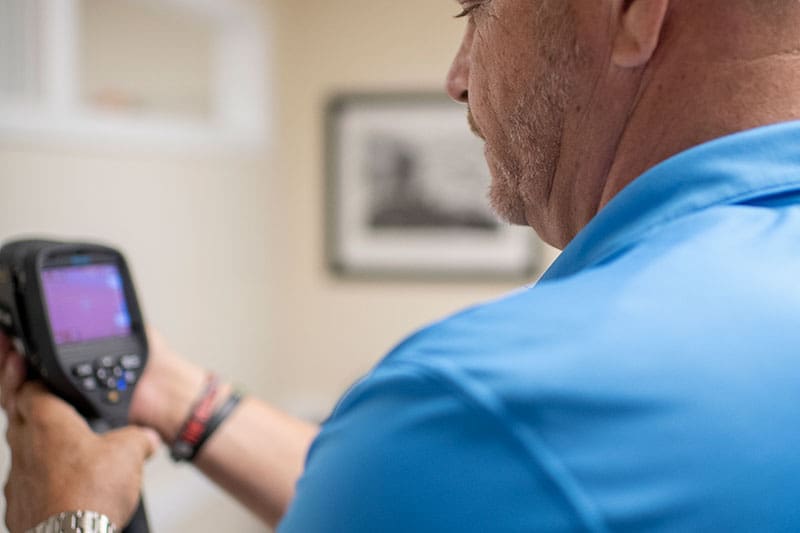
Two men are working together an analysing the state of the barrier testing on site

Building Air Barrier Testing

Our Building Specialists are able to test your building’s air tightness to ensure maximum building performance and efficiency.

Building Air Barrier Testing

Building Air Barrier Testing

SITACx provides consulting and testing related to the performance of air barrier performance on commercial buildings. The Building Air Barrier Testing is a systematic process of verifying the building envelope air leakage rate as well as analysis of the construction of building envelope. We follow test methods for determining air tightness of buildings to meet ASTM standards.
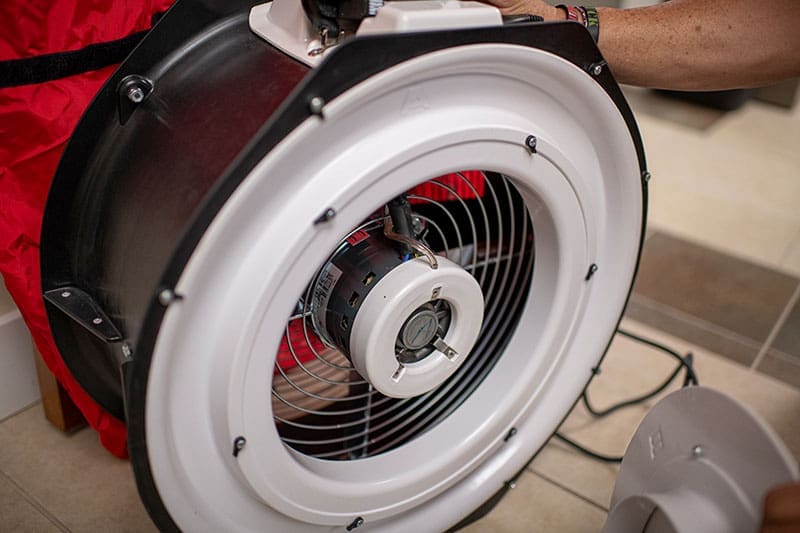
This is a trusted air barrier building and cooling system

Working with trusted systems and equipment

A man is working on site testing air barriers

On site testing done by professionals

Benefits of Air Tight Building

Benefits of Air Tight Building

Air Tight Building benefits include: enhanced building performance, lower operating costs, and greater occupant comfort. Building owners and managers, from government facilities to private owners, are incorporating Air Barrier Testing into their new building or retrofit projects in order to minimize their energy usage and operational costs.
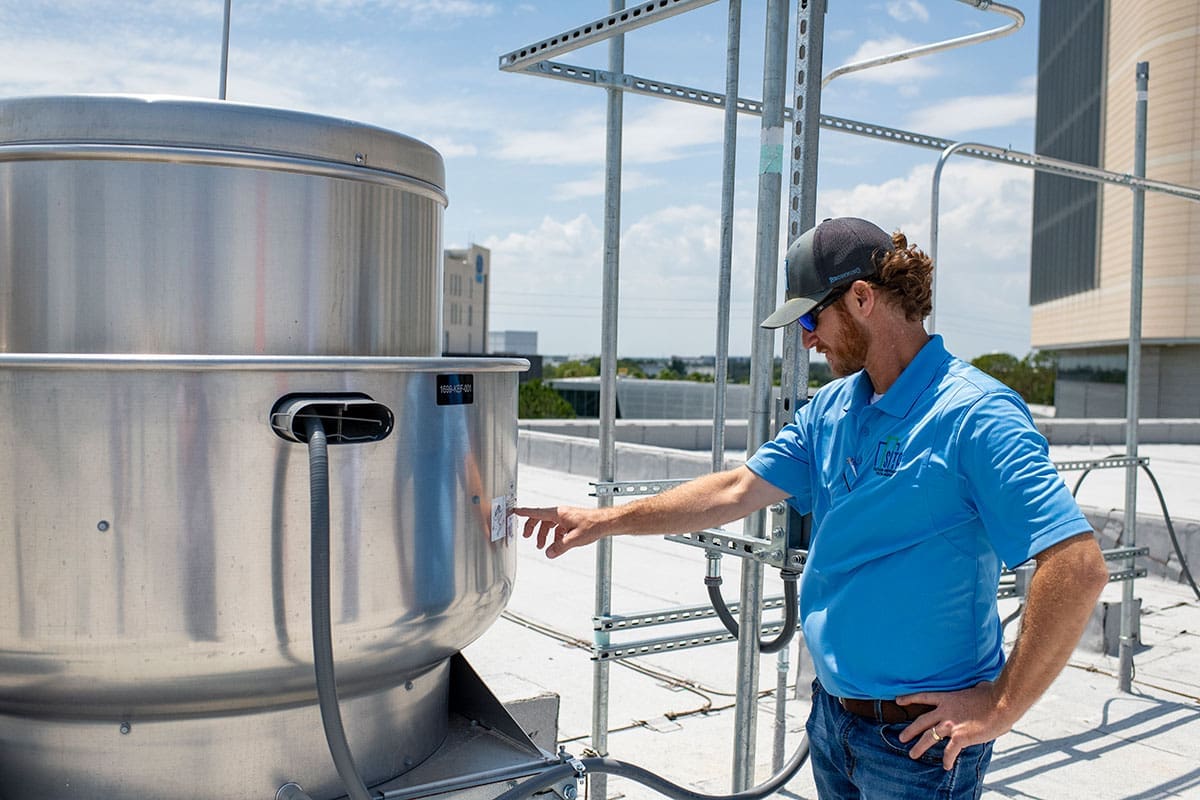
A man from SITA is testing out the air tight building systems

Frequently Asked Questions

Frequently Asked Questions

These questions address the most common concerns building owners have about air barrier testing costs, timing, procedures, and code compliance requirements.

Air barrier testing measures how much air leaks through your building’s exterior walls, roof, windows, and doors. We use a blower door—a large fan mounted in your building entrance—to create pressure inside the building. This reveals where air escapes or enters.

The test shows if your building envelope is sealed properly. Results are measured in CFM (cubic feet per minute) at 75 Pascals pressure. Florida energy codes set maximum limits that your building must meet.

Air barrier testing catches sealing problems before you close up walls with drywall. Finding leaks early saves money. Fixing gaps in open walls costs $200-$800 per issue. Fixing the same problems after drywall costs $5,000-$15,000.

Testing also ensures you pass Florida energy code inspections. Without passing the test results, you can’t get your certificate of occupancy. This delays your project and costs money.

Proper air sealing also reduces energy bills by 15-30% over your building’s lifetime.

An air barrier inspection visually checks that your air barrier system is installed correctly before testing begins. The inspector looks for:

  • Continuous air barrier coverage on all exterior walls
  • Proper sealing around windows and doors
  • Sealed penetrations (pipes, wires, ducts)
  • Connected membranes at joints and transitions
  • No tears or gaps in barrier materials

The inspection happens before the blower door test. It helps identify obvious problems that would cause test failure. Your contractor can fix these issues before formal testing.

Air barrier testing protects your construction investment. It verifies your building envelope performs as designed. This prevents three major problems:

Energy waste: Leaky buildings use 20-40% more energy for heating and cooling. That’s $8,000-$15,000 extra per year for a typical 50,000 sq ft building.

Comfort issues: Air leaks cause drafts, hot spots, cold spots, and humidity problems. Tenants complain and may break leases.

Code compliance: Florida requires air-tightness testing. Failed tests mean no occupancy permit. Your project gets delayed, and you lose money.

Follow these steps to pass on the first attempt:

Before construction:

  • Use quality air barrier materials
  • Review air barrier details with your contractor
  • Plan for continuous air sealing

During construction:

  • Seal all window and door rough openings before the units are installed
  • Use proper flashing tape and sealants
  • Seal all penetrations (electrical, plumbing, HVAC)
  • Connect the air barrier at all transitions (wall to roof, wall to foundation)
  • Protect the air barrier from damage during construction

Before testing:

  • Schedule a pre-test inspection to catch obvious problems
  • Fix any visible gaps or tears
  • Verify all exterior openings are sealed

Best practice: Test early, before drywall installation. This lets you see and fix problems easily. Testing after drywall means expensive demolition if you fail.

Florida code requirements:

  • Office buildings: ≤ 0.40 CFM/sq ft
  • Healthcare: ≤ 0.25 CFM/sq ft
  • High-rise residential: ≤ 0.45 CFM/sq ft

01

Building Inspection and Installation Review

02

Air Barrier Testing and Analysis

03

Envelope diagnostics

Have Any Questions?

Have Any Questions?

We encourage questions and are happy to answer them! You can send your inquiries through our Contact page